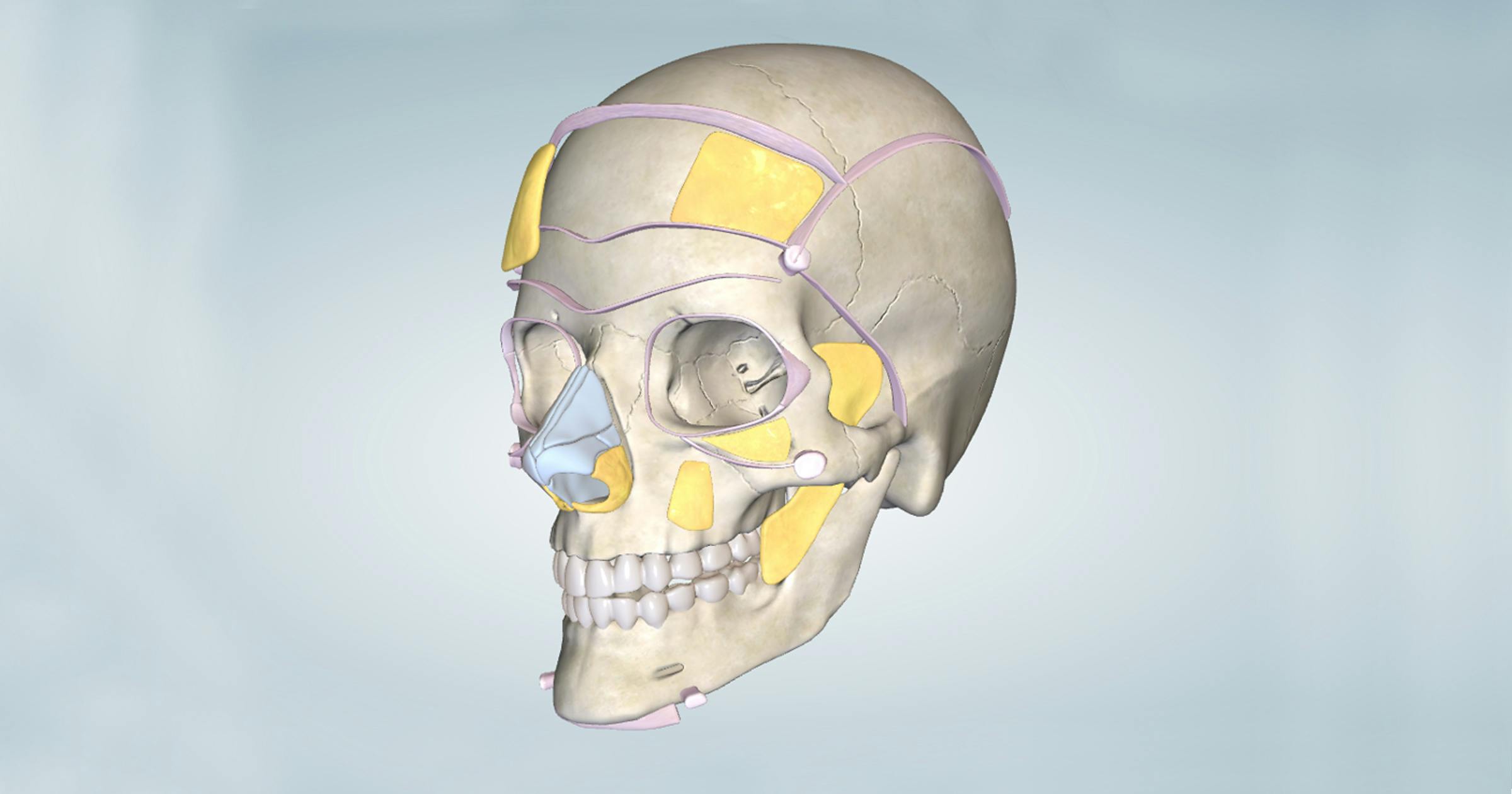
Soft tissue filler injections are still very frequently performed when a local facial volume increase is desired. Having this alternative for a minimally invasive approach is highly attractive, especially for patients who do not want to undergo a facial surgical procedure due to the costs, associated risks, or due to the relatively long down time after the procedure. The essence of such treatments is that an injectable material is introduced into the facial soft tissues via a transcutaneous injection, resulting in a localized increase in tissue volume.
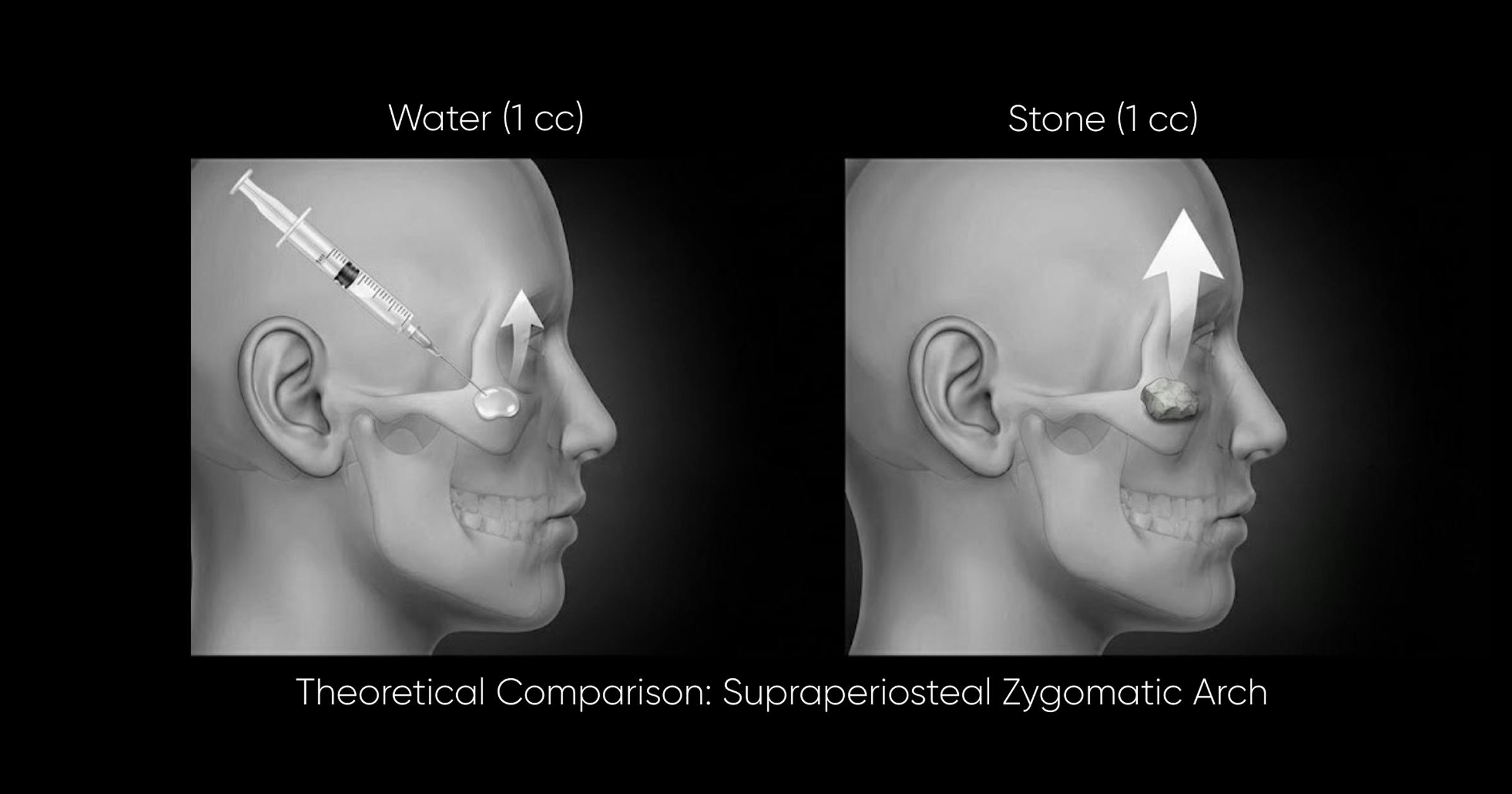
However, this simple cause and effect relationship, is influenced by multiple factors of which the physicochemical characteristics of the utilized material and the treated facial region are the most important ones. One can imagine that if a soft product is injected, the volumizing capacity, i.e., the ability to elevate the overlying soft tissues is small, whereas if a hard and cohesive product is injected the volumizing capacity is high. An easy and theoretical example for comparison purposes is the following: imagine placing 1 cc of water into the supraperiosteal plane of the zygomatic arch versus placing a stone with the volume of 1 cc in that very same location on the other side of the face. It is plausible that the volumizing capacity and the ability to project and elevate the zygomatic soft tissues is higher for the stone than it is for the water.
But how can one describe the different volumizing effects and quantify them into numbers? New technology has allowed researchers and practitioners to measure the volume of the skin surface and compare it to volume before the injection: Volume of skin surface after the injection minus Volume of skin surface before the injection = Volume increase due to the treatment. This delta value (delta = difference between before and after) allows us to determine the magnitude of the volume increase due to the treatment. It is of course understandable that the more volume that was injected, the higher the delta value is. But to account for the injected volume, a coefficient must be calculated between the volume injected and the change observed following the treatment.
An example to make this calculation easy: If 1 cc of soft tissue filler is injected, one would expect to see (and to measure) a volume increase of 1 cc on the skin surface. This would indicate that 100% of the injected product translated into skin surface volumization. A mathematical formula would be as follows: measured volume on the skin surface divided by the injected volume; the result would be a value in percentage which is equal or less than 100% (one cannot obtain more volume on the skin surface than volume injected). This percentage would indicate how much of the injected product resulted in clinical visibility and thus effectiveness of the treatment.
In 2019, our research group investigated the “effectiveness” of soft tissue filler injections for various facial regions and introduced the term Surface Volume Coefficient (SVC) for the first time into scientific literature. In that cadaveric study it was identified that not all facial regions have the same SVC. Instead, it was revealed that the upper cheek (represented by the suborbicularis oculi fat compartment = SOOF) had the highest SVC with 94%, whereas the deep medial cheek fat compartment had the lowest SVC with 29%. Clinically this means that injections into the SOOF translate the administered volume better into surface projection than does the midface; this is in alignment with clinical observations.
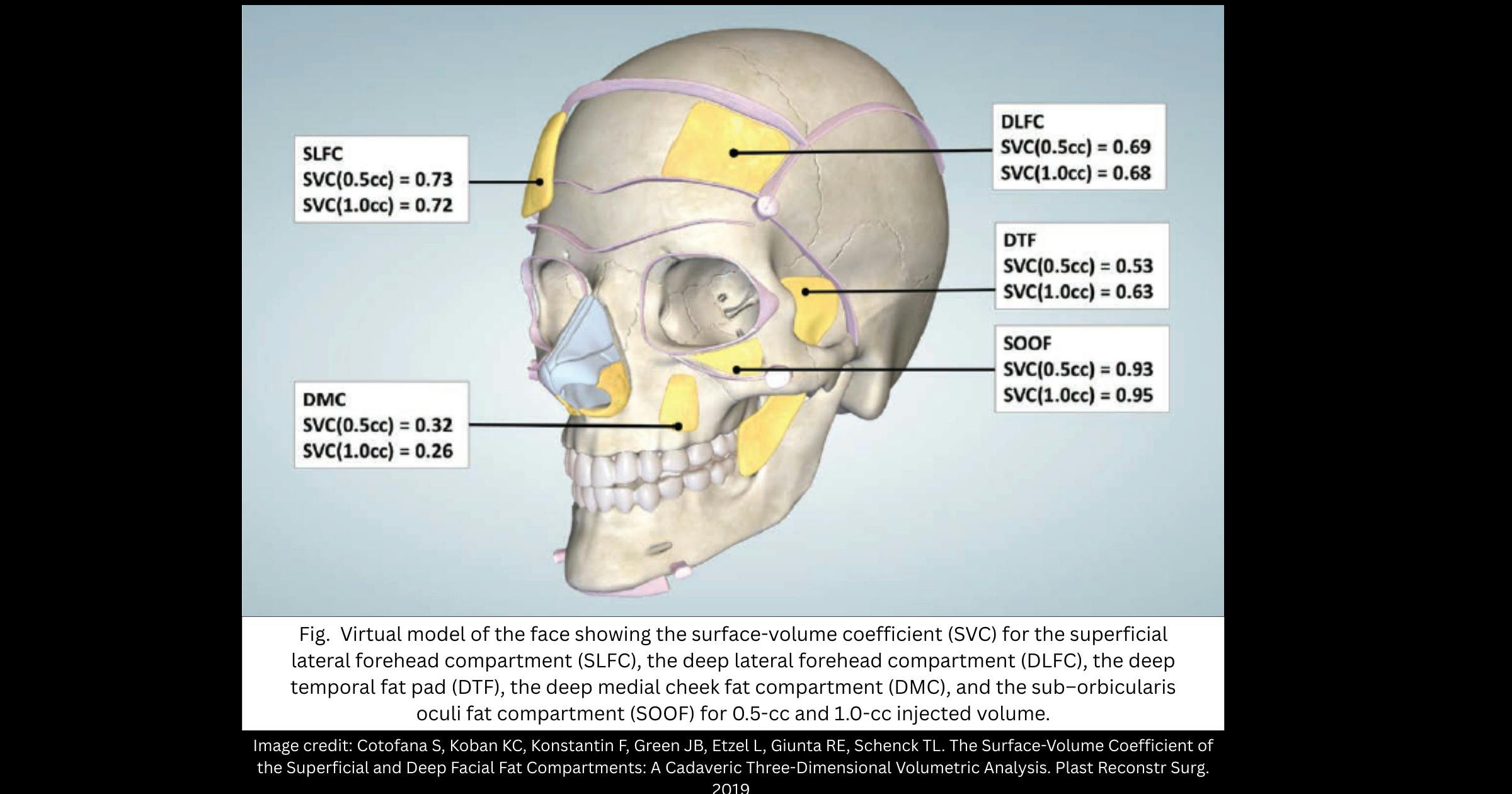
However, the calculation and the description of the SVC was always too difficult to translate during anatomic presentations which left the audience with more questions than answers. Therefore, my dear friend and colleague Dr. Arthur Swift coined another term which became highly successful and almost replaced the term surface volume coefficient: Bang for the buck. Translated this means that there is a measure that tells an injector how much projection (= bang) they will obtain, dependent on the monetary amount that was spent on that respective volume of injectable product (= buck).
I will leave it up the reader to decide which term they would like to use but in essence: there is a value that provides guidance on the effectiveness of soft tissue filler injections which is dependent on the physicochemical characteristics of the injected product and on the targeted facial region. What is still missing, however, is the SVC for various products and the replication of SVC measurements in a clinical scenario i.e. in the living model. Future research will have to provide this information to better guide injectors toward effective and thus safer treatments.

Join our community for news, offers, and updates on Cotofana Anatomy’s events and resources
Copyright © 2026, Cotofana Anatomy. All rights reserved.