According to the annual statistics report of the American Society of Plastic Surgeons (ASAPS), in 2024 close to 10 million Onabotulinumtoxin type A injection procedures were conducted in the US alone. For reference, in the same year only 300,000 breast augmentation procedures were performed. These numbers speak for themselves when it comes to the cosmetic use of this neuromodulator product which is considered to be the strongest poison on the planet. Nothing is more lethal than Onabotulinumtoxin type A, not even the extremely toxic radioactive isotope Polonium-210.
Despite its toxicity, humans enjoy injecting toxins into their faces to reduce facial rhytids, to look younger, to look less angry, or to look happier. Of the various cosmetic possibilities where Onabotulinumtoxin type A can be utilized, the upper face is most frequently targeted. However, in recent years a new indication was introduced to the scientific community: The Toxin Lift
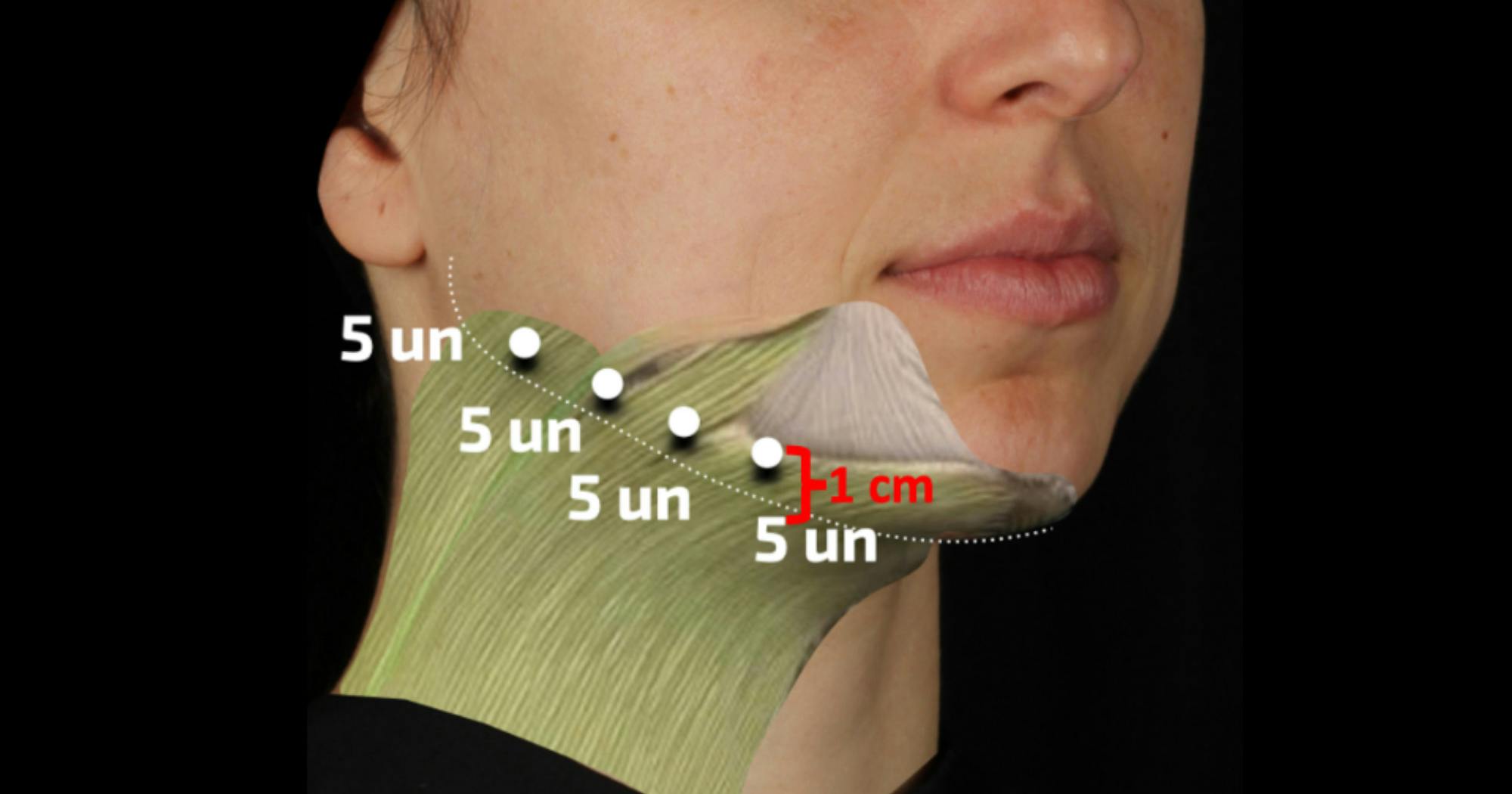
Before explaining what the Toxin Lift is and when to best use it, let me give you a quick review of the scientific literature on this topic. Below you can find a summary of the most relevant lower facial and neck injection algorithms published by year:
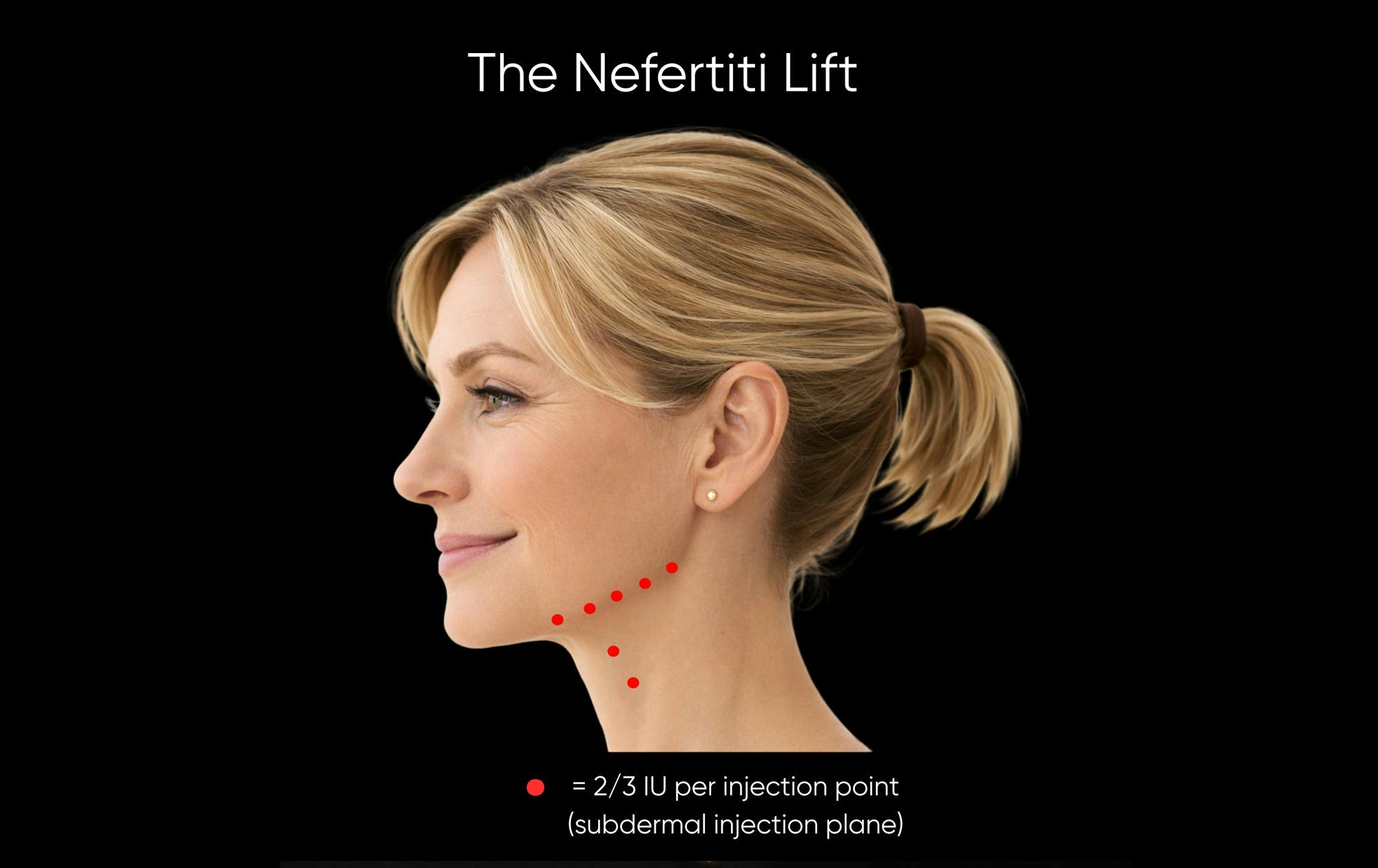
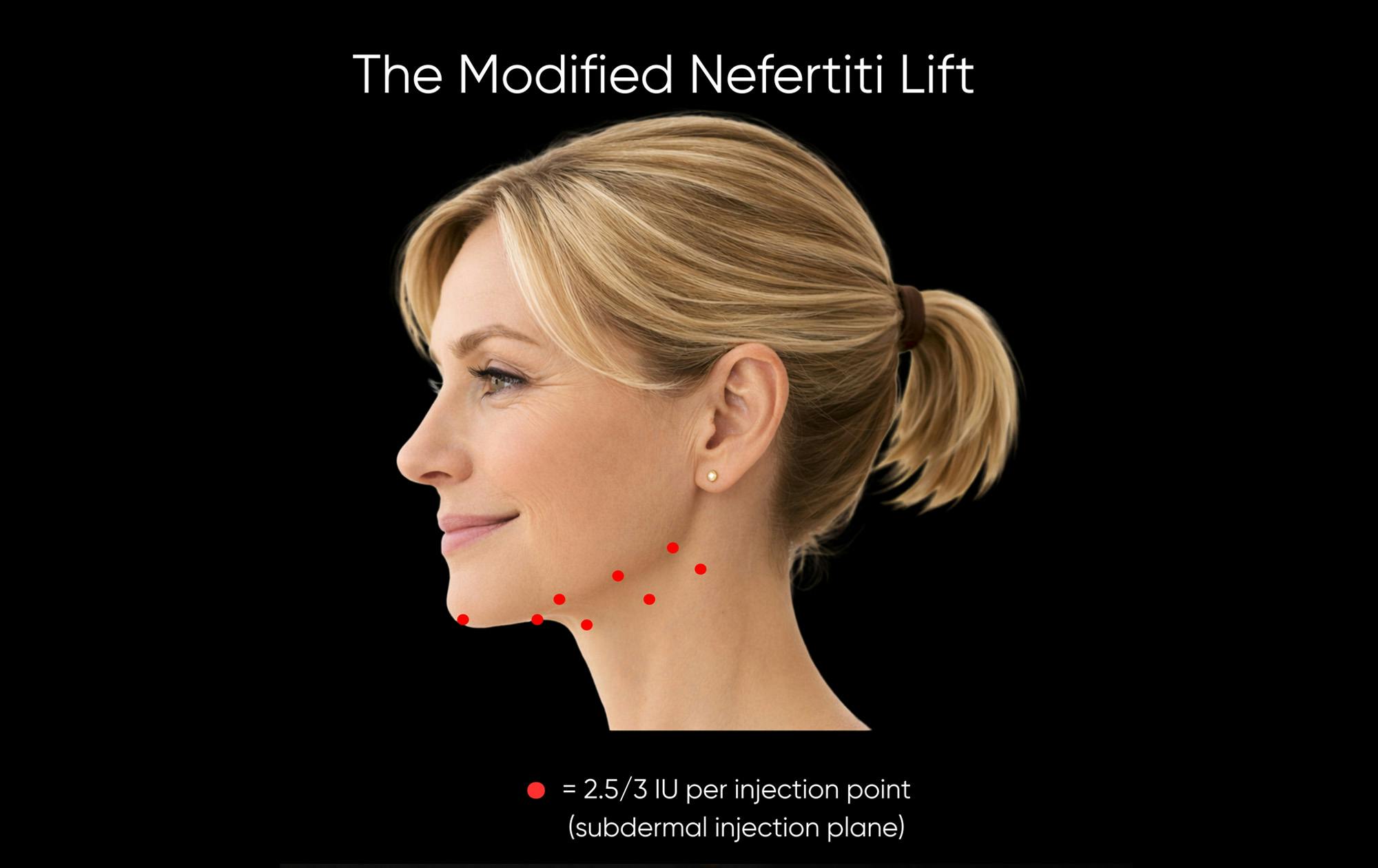
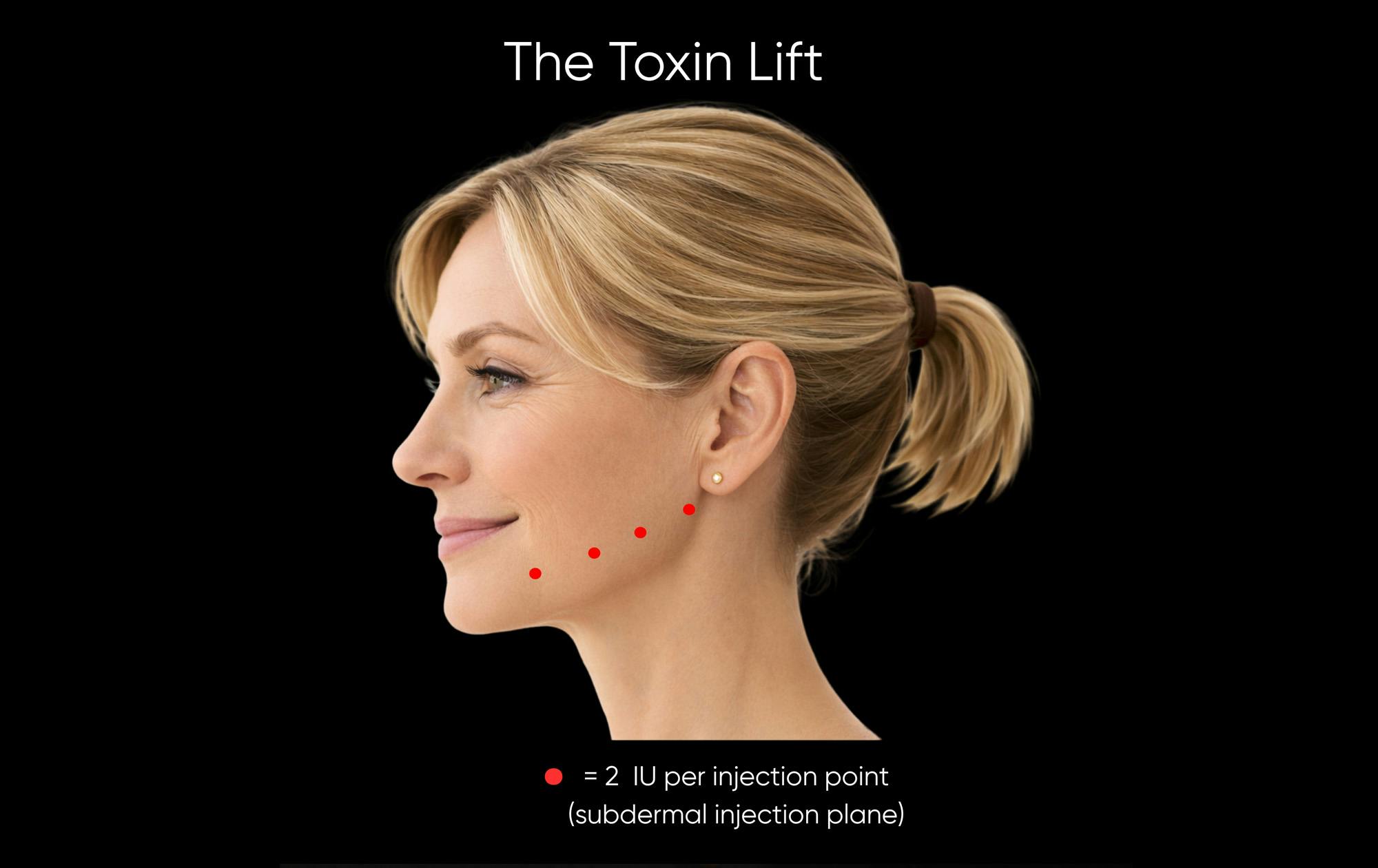
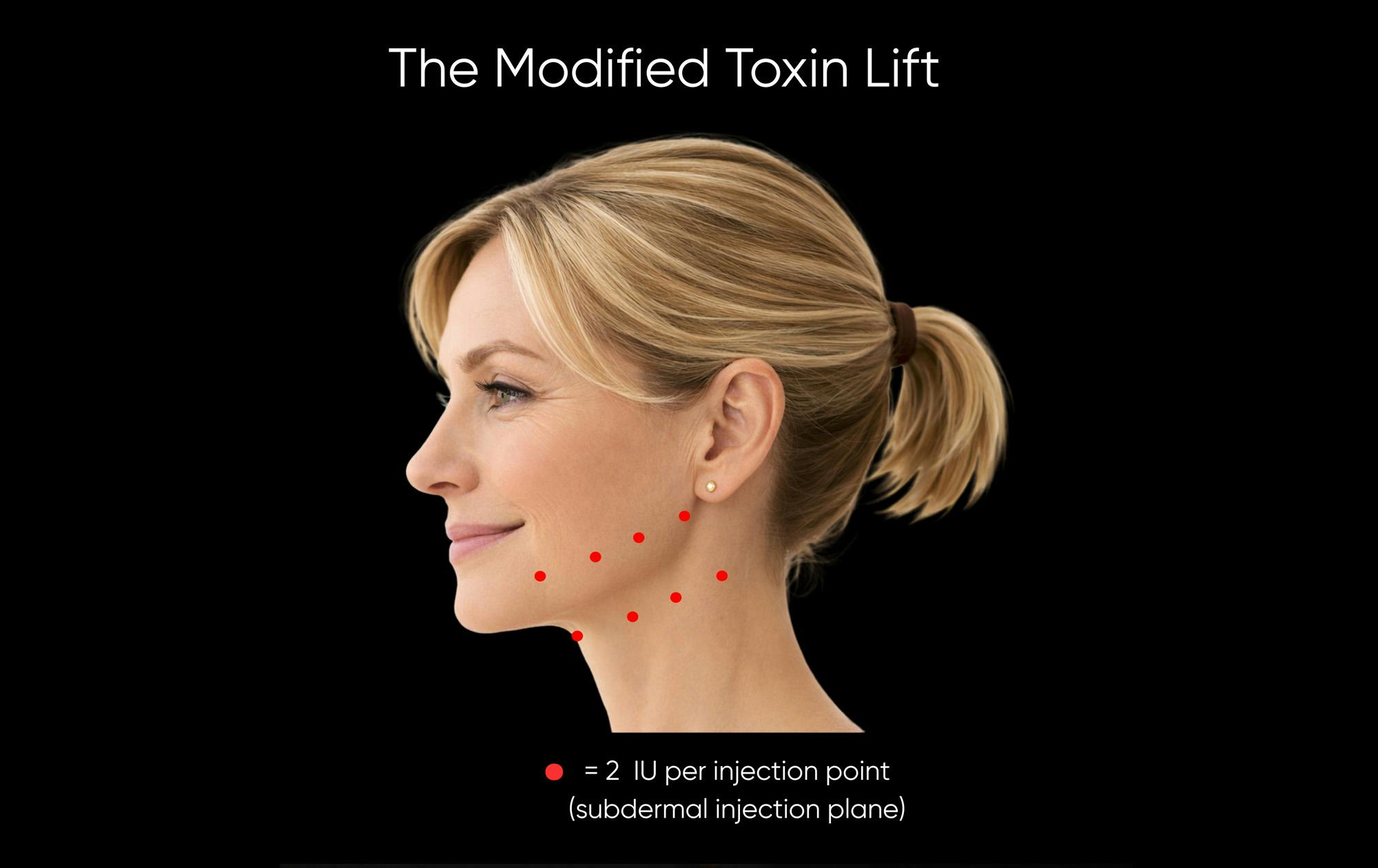
Mechanism Behind the Toxin Lift Injection Technique
The Toxin Lift injection technique is based on the knowledge of the interplay between facial elevators and facial depressor muscles. The largest and strongest facial depressor muscle is the platysma muscle followed by the depressor anguli oris muscle. Relaxing these two muscles during neuromodulator treatments will temporarily reduce the downwards pull of the facial depressors and will give more (relative) strength to the facial elevators like the zygomaticus major, levator labii superioris, levator anguli oris, and orbicularis oculi muscles. Recognizing that the elevator muscles assume temporary functional dominance for the duration of the pharmacologic effect helps explain the observed elevation of the oral commissure, the apparent increase in midfacial volume, and the improvement in infraorbital hollowing, despite the intervention consisting solely of neuromodulator injections administered along the jawline.
Increase in midfacial volume explained:
The increase in midfacial volume can be explained by the conformational changes of the transverse facial septum (another blog article here on www.cotofanaanatomy.com). This septum is connected to the undersurface of the zygomaticus major muscle and can push the midfacial fat compartments upwards when tensed. When the platysma is relaxed, the zygomaticus major muscle can pull more cranially, resulting in increased tension of the transverse facial septum, which in return pushes the midfacial fat compartments upwards. This will increase the midfacial volume and will improve infraorbital hollows.
Gummy Smile adverse event explained:
An understandable adverse event of the Toxin Lift technique is the increase in the Gummy smile. The latter effect is plausible when understanding that the levator labii superioris muscle is the culprit muscle in the Gummy smile. This muscle can suddenly pull the upper lip upward because the respective depressors are temporarily weakened following the Toxin Lift injection algorithm.
Improvement of infraorbital hollows explained:
Regarding the beneficial effect on infraorbital hollows, it is widely known and accepted that infraorbital hollows are best treated starting in the midface by increasing midfacial volume. This is now done via the Toxin Lift injection technique which is why toxin injections along the jawline can improve the tear trough deformity.
Every medical treatment has its pros and cons, and the Toxin Lift is no exception. Fortunately, multiple studies have demonstrated its effectiveness, and many of you have likely already incorporated it into your clinical practice.
Join our community for news, offers, and updates on Cotofana Anatomy’s events and resources
Copyright © 2026, Cotofana Anatomy. All rights reserved.